
How do I know what tyre pressure to use in my car?
Have you ever wondered what your car's recommended tyre pressures are? Generally, most people are aware that they should check their engine oil routinely, but few check their tyre pressures on a regular basis, which is critical if you want to get the most out of your car’s fuel economy and promote good tyre life.
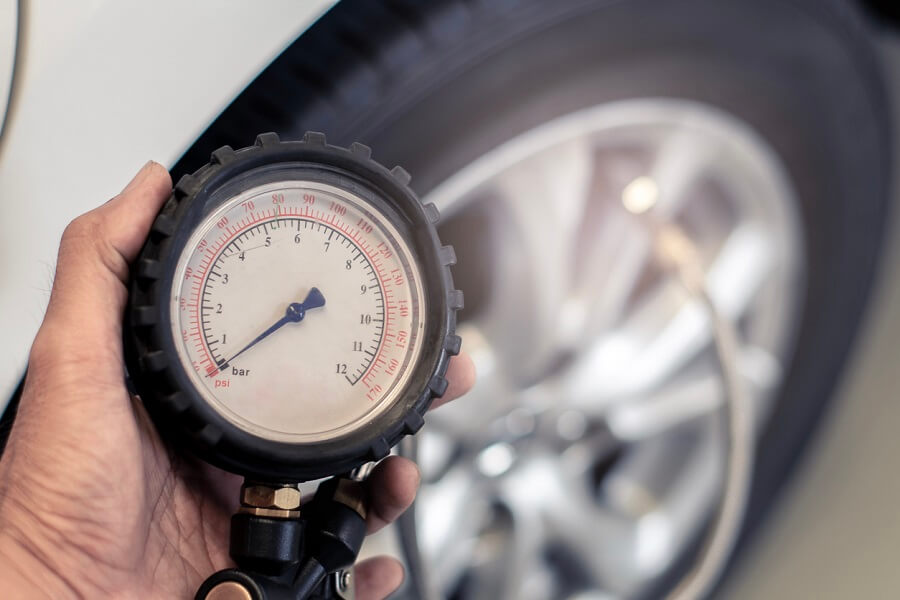
Knowing how much air your tyres need will ensure that they maintain the best traction on the road. The recommended tyre pressure for your vehicle is often measured in pounds per square inch (psi) or sometimes in BAR or kPA.
Your manufacturer's recommended tyre pressure is generally stated directly on the tyre placard found in the driver’s side door and your car’s handbook.
What will you need to check your car’s tyre pressures?
Air Compressor
An air compressor is used to re-inflate your tyres with the recommended amount of air. You can locate it at a fuel station for free, or you can get one from an auto parts store. It is recommended that you use the ones from the fuel station because most of them can automatically fill your tyre to a certain pressure.
Tyre Pressure Gauge
You will also need a tyre pressure gauge to get the best results as many fuel station air compressors are mistreated and infrequently calibrated. This is a device used to measure the amount of air in the tyres of your vehicle.
You can use a manual gauge or, for a simpler experience, a digital gauge can be easier to read. Pressure gauges are inexpensive and can be found at most fuel stations or auto parts stores.
What steps should you follow when checking your vehicle’s tyre pressure?

Make sure your tyres are cold before checking your car's tyre pressures. For this, it is advised that you park your car for at least three hours or have it driven for less than two kilometers at a low speed.
Step 1: Check the recommended tyre pressure
As previously stated, you must determine the recommended tyre pressure for your vehicle. This information can be located on the driver's side door frame, in the glove box, inside the fuel door or in the owner's handbook for your vehicle. If you are unable to locate this information, please contact your vehicle's dealer, manufacturer, or a trained tyre specialist such as Tony's Tyre and Autocare.
Step 2: Check your tyre pressures
Check your tyre pressures each month. This is because tyres lose about one pound per square inch, or PSI, of pressure per month, and one PSI for every ten degrees of outdoor temperature. Please follow the next steps when checking your tyre pressure:
- Get a gauge at any car parts store
- Remove the dust cap by unscrewing it
- Insert the pressure gauge into the valve stem, and get a reading of your tyre's current pressure
- Compare the readings to the optimal tyre pressure to determine if your tyres need to be inflated
- Don’t forget to replace the dust cap by screwing it back on finger tight. This helps prevent debris and damage from causing air leaks to your tyre valve
Step 3: Fill your tyres if necessary
The procedure for filling your tyres varies based on the type of air compressor you use. Many fuel station air lines have either a manual two-stage lever that both inflates and deflates your tyre based on how far you press the lever, while some stations have an automatic booth where you can pre-select your intended tyre pressure.
Regardless of which type of compressor your local fuel station uses, there will be written instructions on how to use that specific equipment.
Cheap foot-pump or 12 volt air compressors are available at auto parts stores if you prefer to have your own equipment.
- Enter the proper pressure in either kilopascal (kPA) or pounds per square inch (PSI) if your air compressor allows you to choose the desired tyre pressure. In general, this should be the manufacturer's suggested pressure that you determined when checking your pressures earlier.
- Remove your tyre's valve cap by unscrewing it.
- Connect the hose from the air compressor to the valve. Maintain pressure against the valve so that air does not escape while the tyre is filling.
- To fill your tyre, press the lever. Simply hold down the lever on an automated tyre compressor until you hear a beep. When you hear the beeping, your tyres are at the proper pressure.
- If you're using a manual air compressor, push the lever and release air in brief bursts into your tyre. If you overfill, most manual inflaters will allow you to deflate the tyre slightly by half pressing the lever down.
- Take pressure readings at regular intervals and repeat as needed.
What do I do if my tyres need frequent inflation?
If you need to top your tyres up frequently, there may be an air leak. We recommend bringing your vehicle in to see the team at Tony's Tyre and Autocare for a complete tyre inspection and leak check.
Many tyre punctures can be easily and cheaply repaired unless the damage is to the tyre sidewall or the shoulder of the tyre.
Underinflated tyres are the leading cause of tyre blowouts and catastrophic tyre failures.
Your local tyre experts.
Here at Tony's Tyre and Autocare, we are your local automotive tyre, mechanical and trailer experts servicing Quakers Hill and the surrounding region including Blacktown, Mount Druitt, Castle Hill, Rouse Hill and Box Hill.
You can find our workshop at 1/402 Quakers Hill Pkwy, Quakers Hill with lots of convenient access and easy parking. Phone us on 02 9837 4455 to book your vehicle to see us, today!