
All you need to know about wheel alignments
Wheel alignment is essentially the process of ensuring your car’s wheels are close to perpendicular to the ground and parallel with the vehicle, within manufacturer’s specifications.
During this process your vehicle’s wheels are measured to make sure that they face the same direction. Some of the main benefits of wheel alignment are:
- Improved fuel economy
- Increased tyre life
- Enhanced vehicle stability under heavy braking
All in all, wheel alignment is done in order to provide safe and predictable handling attributes to a car and to make sure tyres are being worn evenly.
A wheel alignment is also an excellent approach to fine-tune the handling of your vehicle. The alignment may be adjusted much beyond the car’s manufacturing requirements in some motorsport applications with the idea of producing better performance at the expense of tyre wear or component lifespan.
When do you need a wheel alignment service?
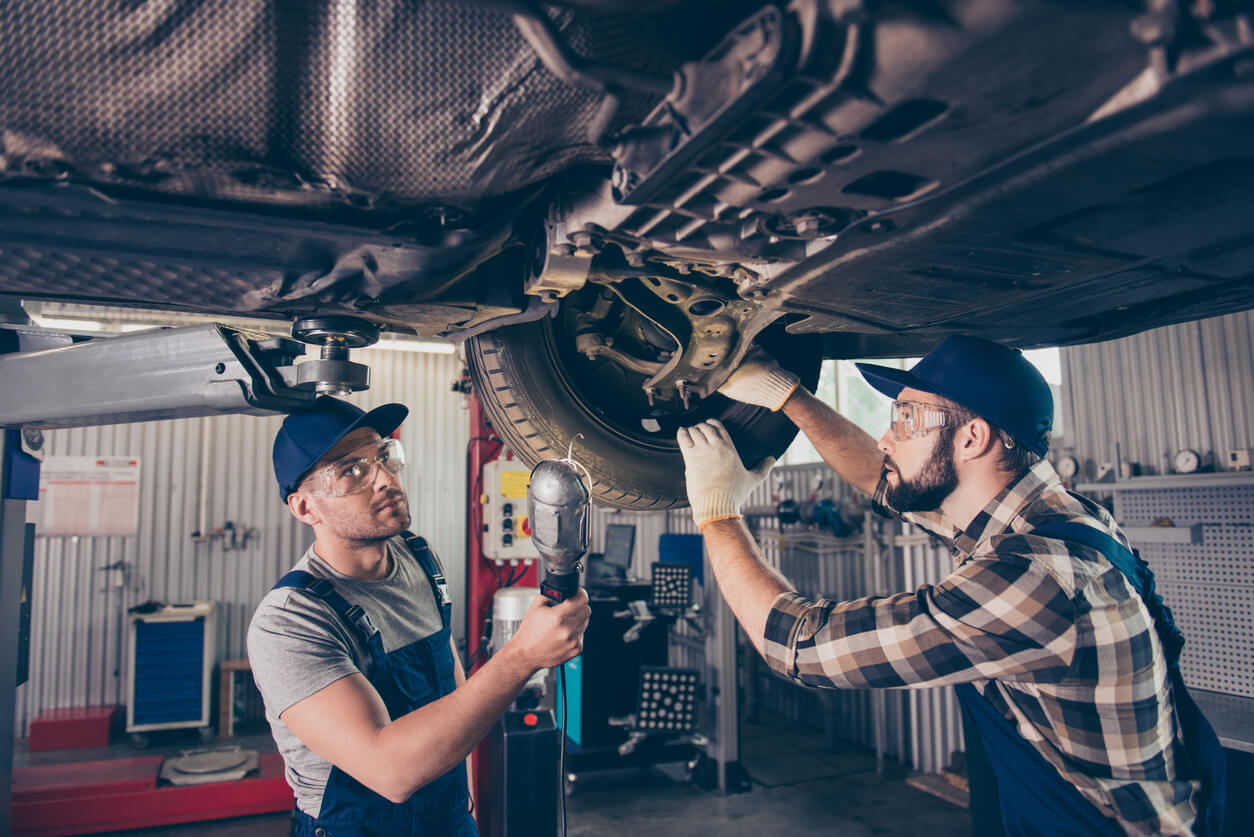
If you notice any of the following symptoms, maybe it’s time to check your wheel alignments:
- The vehicle appears to be pulling to one side during normal driving
- At greater speeds, the steering wheel shudders or vibrates
- Your tyres are unevenly worn
- You’ve run into a kerb or road debris, which can damage suspension
- If your vehicle no longer travels straight although the steering wheel is straight
Generally, it is advisable to perform an alignment service to your vehicle every time you get new tyres fitted. Also, at roughly 10,000km intervals when you're having your tyres rotated.
Regular alignment and rotation ensures that you get the most out of your tyres while also preventing uneven wear.
What settings are checked during a wheel alignment service?
During a wheel alignment check up, we’ll look at the following components: camber, caster and toe.
Camber: the side to side tilt of the wheels looking from front on. When the camber is out of adjustment, one side of the tyre tread will wear at a faster rate, creating uneven tyre wear.
Caster: a measurement represented in percentage that affects a vehicle's steering wheels. When the caster is out of alignment it can cause problems in straight line tracking, but it has little effect on tyre wear.
Toe-in: the toe measurement is the difference in the distance between the front and the back of the tyres. Toe-in basically means that the front tyres are closer to each other than the rear. An incorrect toe-in will cause rapid tyre wear to both tyres equally.
While camber, caster and toe-in are the components that are most often checked during a wheel alignment service, they are not the only parts.
There are other components that are important to look at when diagnosing front and end problems, including:
- Steering Axis Inclination (SAI)
- Included Angle
- Scrub Radius
- Set Back
- Riding Height
- Thrust Angle
- Steering Center
- Toe Out on Turns
Our professionals at Tony’s Tyre and Autocare
All in all, a wheel alignment service is necessary for better driving control, comfort, and safety, as well as getting the most out of your tyres.
Your car will handle better when your tyres are properly aligned because it guarantees that your steering wheel and tyres are pointing straight ahead.
If your vehicle is experiencing any of the symptoms mentioned previously, contact Tony's Tyre and Autocare on 02 9837 4455 or call in and see us at 1/402 Quakers Hill Pkwy, Quakers Hill. Make sure your wheels get a professional touch by our qualified and experienced staff.